


THE SCIENCE
Mitochondrial repair is the
unaddressed mechanism in AKI
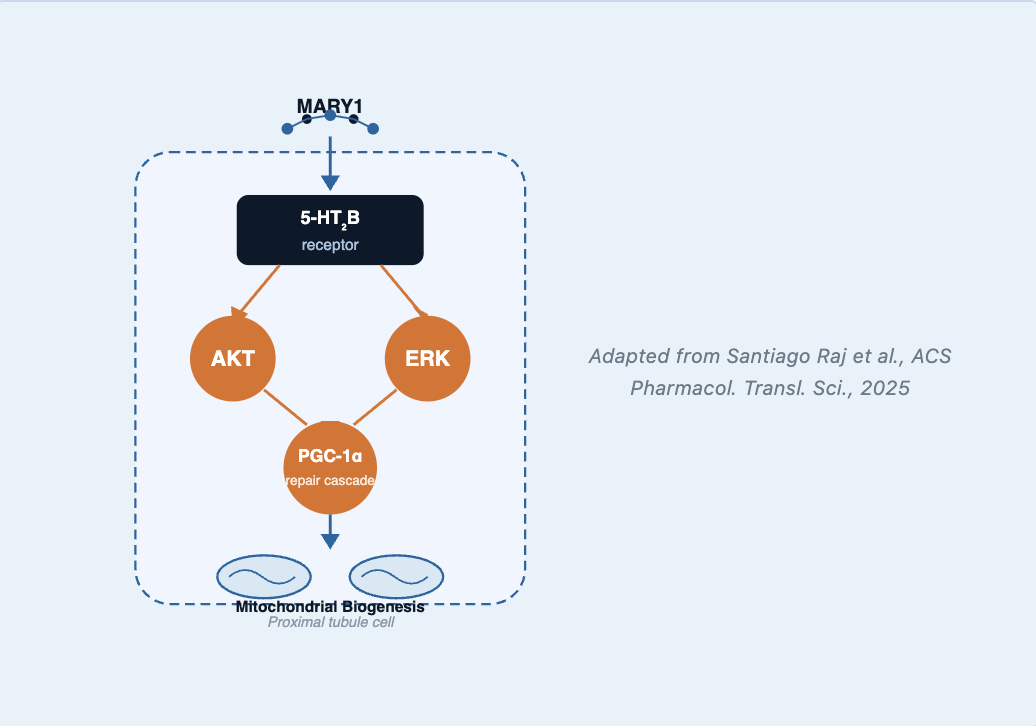
Ischemia-reperfusion injury drives mitochondrial dysfunction in the kidney — loss of membrane potential, failure of ATP synthesis, and tubular cell death. MARY1's selective antagonism of 5HTR2B re-engages the PGC-1α–linked mitochondrial repair program, restoring mitochondrial biogenesis, fatty acid oxidation, and electron transport chain function in proximal tubule cells.
⚡
Both preventive and reparative activity
Preclinical studies support MARY1 activity in two distinct windows: administered prior to anticipated ischemia-reperfusion injury, MARY1 reduces the severity of renal injury; administered after injury, it drives recovery. This dual-window profile has direct relevance to surgical settings where the injury window is known in advance. Additional IP covering the preventive use is in process.
🔬
Validated across species and models
Reproducible signals in mouse and rat ischemia-reperfusion AKI, diabetic kidney disease, and aging kidney models. 5HTR2B expression and MARY1 activity confirmed in rabbit, mouse, and human proximal tubule cells.
📊
A measurable PD bridge to humans
PGC-1α, mitochondrial DNA, FAO and ETC proteins, and tubular injury signals are being developed as qualified clinical assays — designed to confirm mechanism engagement and recovery attribution in first-in-human studies.
🛡️
Class-aware safety logic
Known 5HTR2B valvulopathy risk is agonism-linked. MARY1 is a functional antagonist with no 5HTR2A/2C activity at tested concentrations. Rat 28-day tolerability preserved survival, body weight, and organ weight to 100× the therapeutic dose. The IND plan is designed to retire class risk prospectively.
Published preclinical evidence
Two peer-reviewed papers establish the mechanistic and in vivo basis for MARY1's clinical development.